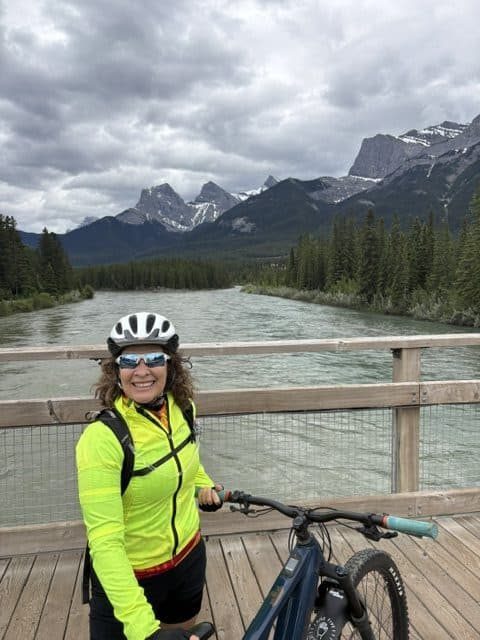
Nadine Frisk is a former BioCanRx Learning Institute Scholar and current Learning Institute Working Group member. To wrap up Cancer Survivors Month and Cancer Immunotherapy Month 2026, she shares her experience with immunotherapy –– and her perspective on what needs to come next.
For most of us, the word “cancer” conjures up a specific image: the hair loss, wasting, and long hospital stays associated with chemotherapy, which has been the standard of care for decades in Canada. But with the expanding field of cancer immunotherapy bringing new cancer therapies to patients, this image is beginning to change. Cancer immunotherapies are changing the game for Canadian patients – with fewer side effects and better outcomes.
One of these patients is Nadine Frisk, a social worker from British Columbia. When Nadine was diagnosed with ALL-acute lymphoblastic leukemia, her first line of treatment was chemotherapy. Her diagnosis came during the COVID-19 lockdowns, and a life-threatening fungal infection she contracted after her chemo treatment kept her in the hospital for months. “‘I hadn’t been outside the hospital for such a long time and it really left me feeling low and very isolated,” she says. Then came worse news: the chemo wasn’t working.
Immunotherapy is a developing field, and especially a few years ago, it was not readily available to most patients. When Nadine’s hematologist recommended Blinatumomab, a monoclonal antibody which targets a protein on cancer cells to help the immune system recognize and attack them, she didn’t even know it was classified as an immunotherapy. But she hoped it would be her chance to reach remission so she could receive the stem cell transplant she desperately needed to survive.
“After finishing treatment and receiving my stem cell transplant, I began looking deeper into my own care and discovered that the Blina drug I’d been given was a form of immunotherapy — and that it isn’t offered across Canada. That discovery reshaped how I understood my entire journey and set me on the path toward my future advocacy. It made me realize just how fortunate I was that my hematologist, Dr. Kevin Hay and the BC Bone Marrow Transplant program were able to offer it to me. It also opened the door for me to become a patient partner in preclinical research focused on immunotherapy, allowing me to use my lived experience to help advance treatments that could change the future for other patients.”
Blinatumomab is transfused through a pump which the patient wears 24/7, which makes it possible to treat as an outpatient. For Nadine, this made all the difference. “I finally had the chance to get myself into a steadier physical condition — stronger than I had been in months. I could rebuild my strength, put weight back on, and prepare mentally and emotionally for what was ahead. It lifted me in every way. I was able to spend meaningful time with my husband Toby, and together we could support each other through the uncertainty surrounding the upcoming transplant. Immunotherapy didn’t just save my life; it gave me the fighting strength for my second chance at life through my stem cell transplant. That was a gift I’ll never forget.”

Still, even for Nadine, the miracle drug was not easy to access and came at a high cost. She and her husband relocated from the Okanagan Valley to Vancouver for ten months while she received treatment, to be close to the hospital for her appointments. Geographic access remains a major concern for access to cancer treatments across Canada, which has many rural and remote communities; for immunotherapies, that access is even more limited.
For Nadine, this isn’t acceptable. “Immunotherapy saved my life. I am very passionate about building awareness of immunotherapy as a treatment option — the benefits, the quality of life it can offer compared to traditional chemotherapy and radiation — and the barriers patients face in accessing these treatments in Canada. I want everyone to have the same life saving opportunities I had. I tell anyone I encounter who has been diagnosed with any type of cancer to talk to their oncologist about the option of immunotherapy.” While there are regulatory and financial roadblocks in the Canadian system which prevent immunotherapies from progressing to the clinic, Nadine also sees an opportunity for patient and caregiver advocacy. “I believe there is significant advocacy work still needed within patient communities around immunotherapy. The challenge before us now is making immunotherapy truly accessible to all patients across Canada. There is still a great deal to accomplish.”

Cancer immunotherapy saved Nadine Frisk’s life, but it also improved her quality of life during treatment and in survivorship. For cancer treatments, this is rare. Unfortunately, she still lives with debilitating side effects from her chemotherapy and radiation treatments. “In my opinion, immunotherapy doesn’t carry the same long‑term impact on quality of life in survivorship — and that is critically important. When you’re in treatment, you don’t realize what survivorship is really going to be like. I assumed that if I could make it alive through treatment and reach remission, my life would simply go back to what it was. I had no awareness of how harsh chemotherapy and radiation truly are, or the lasting impact they would have on my body, my cognitive ability, my energy, and my mood. Knowing what I know now, if anyone has the opportunity to access immunotherapy as their first line treatment, I think that’s an invaluable gift.”
So how does Nadine believe we can get to the future where life-saving cancer immunotherapies are first-line treatments? Better funding of translational research, building better awareness in patient communities, and advocating for a healthcare system which can support groundbreaking therapeutics. From her perspective, access to care is the ultimate goal. “I don’t center my energy on the cure. My focus is on today — on ensuring immunotherapy becomes accessible to everyone, and on moving toward a future where patients no longer need to rely on traditional chemotherapy and radiation, while at the same time preclinical and clinical research is moving us closer to the cure.”